Customers
  Distributor
  Join us as an Advisor
  Employee













































 :
:  :
:  :
: 


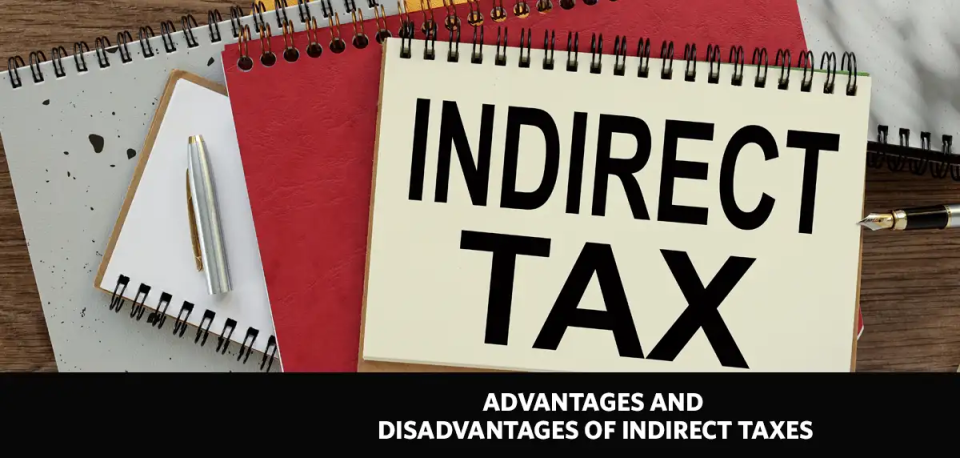




Taxes are a major source of revenue for a government. They allow the government to develop public services, infrastructure, and boost welfare programs. There are broadly two types of taxes: direct and indirect. While direct taxes are paid directly to the government by individuals or businesses, indirect taxes are collected through goods and services.
Understanding the advantages and disadvantages of indirect taxes is important. They impact each citizen and influence the overall economic environment in a country.
What are Indirect Taxes?
An indirect tax is a form of taxation applied to goods and services rather than directly on income or profits. This means the tax burden is passed from one party to another, usually from the seller to the final consumer. Common examples of indirect taxes in India include the Goods and Services Tax (GST), customs duty, and excise duty.
For instance, when you buy a product, the GST added to the price is an indirect tax. The seller collects it from you and then remits it to the government. Unlike what income tax is, which depends on your earnings, indirect taxes are linked to your spending/consumption habits.
Understanding such tax concepts can help consumers and businesses manage their finances and remain compliant with the law.
Advantages of Indirect Taxes
Indirect taxes are an important component of India’s taxation system. Here are some of their major benefits:
Easy to Collect
Indirect tax is collected at the point of sale. This makes it easier for the government to manage. Businesses collect the tax from consumers and pass it on to the authorities.
Broad Coverage
Since everyone pays taxes when purchasing goods and services, the system ensures a wide tax base. Even those who are not eligible to pay income tax can contribute indirectly to the nation’s development.
Encourages Savings and Investment
Unlike direct tax, which is linked to one’s income, indirect taxes do not directly reduce disposable income. As a result, individuals have more freedom to save and invest.
Discourages Harmful Consumption
The government can, and often does, impose a higher indirect tax on goods like tobacco, alcohol, or sugary drinks. This can help discourage their consumption and promote healthier habits.
Flexible and Dynamic
The government can adjust indirect tax rates on the basis of economic conditions. For instance, lowering taxes during a recession can lead to higher consumer spending.
Encourages Transparency
The introduction of GST has streamlined the indirect tax system by combining multiple taxes into one transparent framework. It also reduced the cascading effect of taxes and made it easier for businesses to comply.
Disadvantages of Indirect Taxes
Despite their benefits, there are also drawbacks to these types of taxes.
Regressive Nature
Indirect taxes affect rich and poor consumers equally. Low-income individuals spend a larger portion of their income on essentials. The burden of such taxes can feel heavier on them (as compared to wealthier people).
Impact during Inflation
Higher indirect taxes can increase the cost of goods and services. As businesses pass the tax onto consumers, prices can rise and lead to inflation.
Complexity in Compliance
Although systems like GST have simplified things, small businesses tend to struggle with registration, documentation, and other aspects of the process.
Reduced Purchasing Power
When the cost of goods increases due to higher taxes, consumers might cut back on non-essential spending. This can affect overall market demand.
Possibility of Tax Evasion
In cases where the supply chain is not well-regulated, there can be instances of non-payment of indirect tax. It can lead to revenue loss for the government.
Burden on the Middle-Class
Earners with an income that puts them in the middle-class, who already pay direct taxes like TDS, often feel the combined pressure of both direct and indirect taxation. Their disposable income might reduce, and lead to a reduced consumption in the market.
You can use a tax calculator to check your direct tax liability. This can help you get a better understanding of your total tax outgo, and you can strategize your tax-saving accordingly.
Summarising the Advantages and Disadvantages of Indirect Taxes
Here’s a table summarising the pros and cons of indirect taxes in brief:
Advantages | Disadvantages |
Easy to collect through sellers | Can be regressive in nature |
Wide coverage, as everyone contributes | May lead to inflation |
Promotes savings and investments | Complex compliance for small businesses |
Controls harmful consumption | Reduces purchasing power |
Adjusted as per economic needs | Potential tax evasion |
Simplifies overall taxation via GST | Adds burden to middle-income groups |
Understanding the advantages and disadvantages of indirect taxes helps both consumers and businesses make informed decisions. Such taxes can provide steady government revenue and promote fairness. However, they can also increase costs and be a burden on certain income groups. With thoughtful planning and tools like a tax calculator, you can manage your finances with care and stay tax-efficient.