Customers
  Distributor
  Join us as an Advisor
  Employee













































 :
:  :
:  :
: 









Being self-employed in India can give you more freedom over what kind of work you do and how you go about doing it. But what it also does is make you entirely responsible for the compliance to taxation for freelancers and self-employed individuals. There is no payroll department deducting TDS for you, so if you get things wrong, you can risk penalties, interest, and undergo a lot of stress in the days to come.
What is tax and how does it apply to you?
If you have always wondered what tax is, think of it as a compulsory share of your income. You pay this share to the government in return for using infrastructure, systems and services such as roads, courts, and digital platforms.
For self-employed people, tax is calculated on “profits,” not on every rupee that comes in.
- Your gross receipts or turnover is the total you earn from all clients.
- From this earning, you subtract legitimate business expenses like software, tools, internet, office rent, professional fees, marketing, travel related to work and depreciation on laptops, phones and other assets.
- What remains is your taxable profit.
Do you fall into the category of a self-employed individual or a freelancer?
If you earn on your own, you are almost certainly covered subject to taxation for self-employed individuals. You fall into this bucket if you work as a consultant, creator, designer, developer, doctor, CA, lawyer, or run a small business where clients pay you directly instead of a salary. In Income Tax language, your income is taxed under “Profits and Gains of Business or Profession,” not “Salary.”
This is why taxes for the self-employed feel different from what salaried people deal with. You receive gross income in your bank, you track your own expenses, and you decide which regime and deductions to use.
Understanding Income Tax Slabs for the self-employed**
Individual self-employed taxpayers are taxed according to Income Tax slabs, just like salaried individuals. India now has two regimes – the old regime with more deductions and the new regime with lower slab rates and fewer deductions. The newer one has been made the default in recent years.
Broadly, under the latest rules, the new regime offers
- A zero-tax slab for a basic income band.
- Gradually increasing rates as you move into higher income brackets.
- A higher effective tax-free threshold because of enhanced rebate under Section 87A after Budget 2025, which significantly reduces tax for middle-income earners.
The exact numbers change with each year’s budget announcements. So, before you file any income tax return for self-employed income, always check the current Income Tax slabs on the official e-filing portal instead of relying on old articles or hearsay.
How to compute your freelance income and tax**
For accurate freelance tax computation, follow a clean sequence every year.
Step 1. Add up all receipts. Include money from every client, Indian or foreign, credited to your bank or received as cash or via platforms.
Step 2. Deduct eligible business expenses. Keep invoices, rent agreements and bills ready. If you are ever questioned, the burden of proof is on you.
Step 3. Add income from other sources. Include all things not connected to your professional income, such as interest on savings accounts or FDs, rental income, and capital gains.
Step 4. Subtract deductions you are entitled to. Under the old regime, this includes Section 80C, 80D and others. Under the new regime, the list is much smaller, but some deductions still exist.
Step 5. Apply the relevant Income Tax Slabs under your chosen regime to arrive at your final tax liability.
Using an income tax calculator to avoid guesswork
Instead of doing all the math manually, it would be easier to use an online income tax calculator.
A good calculator lets you
- Enter your business income, other income details, and deductions.
- Compare your tax under the old and new regimes.
- See how much advance tax you should pay each quarter to avoid interest.
You should run your numbers through an income tax calculator at least twice a year. Do it during the middle of the year to see if you need to increase advance tax payments, and again before the due date of income tax return for freelancers, so that you are not surprised by a big final bill.
Forms and due dates of ITR for the self-employed
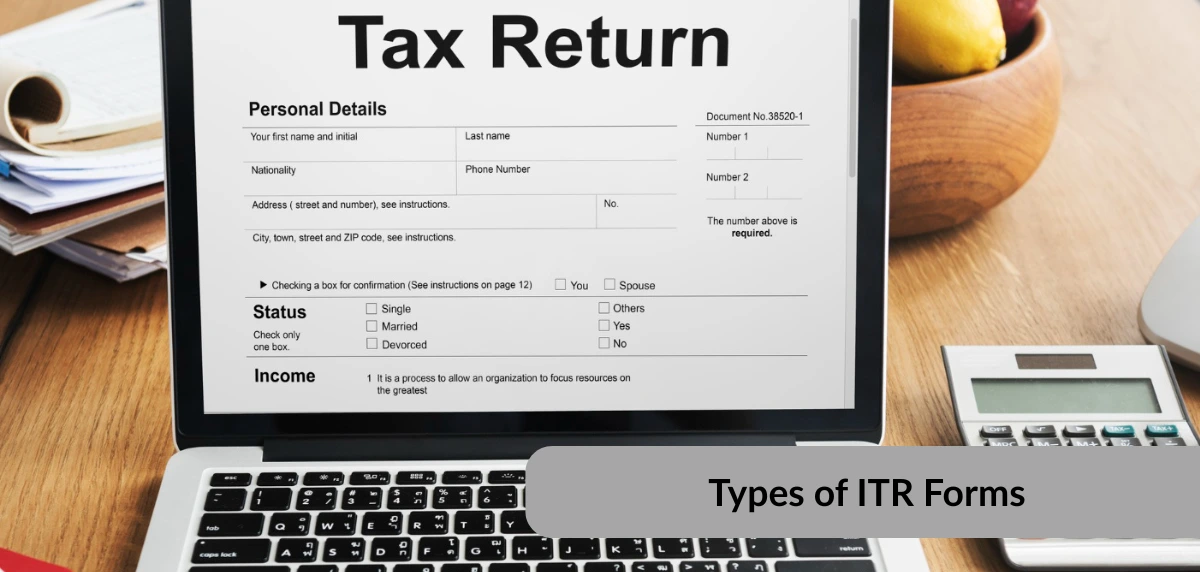
For most small proprietors and independent professionals, filing of Income Tax Return (ITR) for the self-employed must be executed through ITR-3 or ITR-4, depending on whether you use normal or presumptive taxation.
- Use ITR-3 if you maintain full books and do not opt for presumptive schemes.
- Use ITR-4 if you opt for presumptive taxation under sections like 44AD or 44ADA.
This is your formal income tax return for self-employed activities and must be filed online through the government e-filing portal. Income tax return for freelancers is not a separate category; you simply choose the correct ITR form based on nature of income and turnover.
Tax-saving investments**
Even if you choose the new regime, some deductions remain, and under the old regime, you get a wider list of tax saving investments.
Common examples include:
- Contributions eligible under Section 80C such as PPF, ELSS funds, EPF, certain life insurance premiums and principal repayment of home loans.
- Health insurance premiums eligible under Section 80D for yourself and your family.
- Pension products and NPS contributions under Sections 80CCC and 80CCD were applicable.
Instead of blindly buying products in March, you should decide your required tax-saving investments at the start of the year and spread contributions monthly. That way, you avoid cash flow stress and also invest more rationally.
Practical compliance tips on taxes for the self-employed**
If you want to stay on the right side of taxes for the self-employed, a few habits could help more than anything else.
Use a separate bank account for business
Mixing personal and professional spending makes it hard to prove expenses during scrutiny.
Maintain digital records
Store invoices, bills and contracts in cloud folders so that you never lose proof.
Track TDS already deducted by clients
Reconcile Form 26AS and AIS with your own records before filing any income tax return for self-employed work
Pay advance tax on time
If your total yearly tax exceeds Rs. 10,000, you are expected to pay advance tax in instalments rather than only at the end of the year.
Take help when needed
For complex cases, international clients, or large turnovers, working with a CA is cheaper than making serious mistakes.
If you are self-employed, tax is not optional, and ignorance is expensive. Understanding what tax is, how Income Tax Slabs work, which ITR form applies to you, and how to use tools like an income tax calculator and smart tax saving investments, is non-negotiable.**
The good news is that once you set up a simple system for your freelance tax, maintaining it every year becomes straightforward. Treat taxation for self-employed professionals as part of your business hygiene rather than a once-a-year crisis, and your income tax return for freelancers should stop being a nightmare and start being just another annual task you handle with confidence.
** Tax exemptions are as per applicable tax laws from time to time.