Customers
  Distributor
  Join us as an Advisor
  Employee













































 :
:  :
:  :
: 


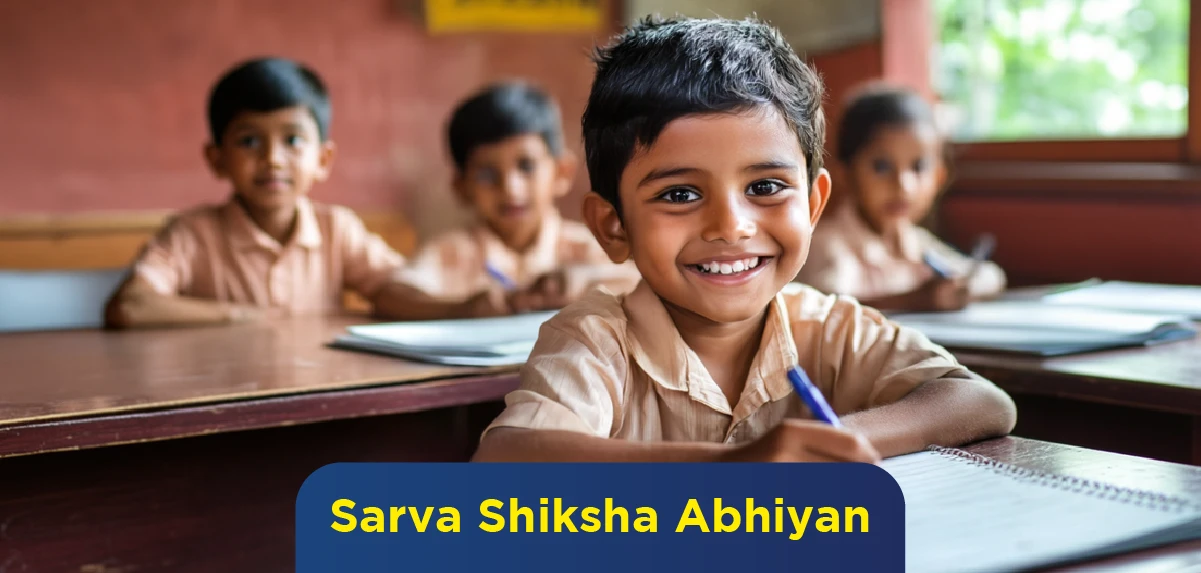







Education is the foundation of social and economic development. In India, achieving universal elementary education has been a long-standing challenge due to regional, economic, and social disparities. To address this, the Government of India launched the Sarva Shiksha Abhiyan, one of the most ambitious education reform programmes in the country’s history.
This initiative marked a shift from selective educational development to a rights-based, nationwide approach aimed at ensuring access, equity, and quality in elementary education.
What Is Sarva Shiksha Abhiyan
Sarva Shiksha Abhiyan (SSA) is a flagship programme of the Government of India aimed at universalising elementary education for children aged 6 to 14 years. The programme was launched in 2001–02 as a centrally sponsored scheme implemented in partnership with state governments.
The core objective was simple but ambitious: every child should be in school and complete elementary education within a specified time frame.
Sarva Shiksha Abhiyan Scheme: Key Objectives
The Sarva Shiksha Abhiyan scheme was designed with multiple interlinked goals.
Its primary objectives included:
- Universal access to primary and upper primary education
- Universal retention of children in schools
- Bridging gender and social category gaps
- Improving the quality of elementary education
The programme focused not just on enrolment, but also on infrastructure, teacher availability, learning outcomes, and community participation.
Major Components of Sarva Shiksha Abhiyan
The implementation of Sarva Shiksha Abhiyan involved several components working together.
School Infrastructure Development
SSA supported the construction of new schools, additional classrooms, toilets, drinking water facilities, and boundary walls. The aim was to ensure that the lack of physical infrastructure did not prevent children from attending school.
Teacher Recruitment and Training
Teacher shortages were addressed through large-scale recruitment. SSA also focused on regular teacher training to improve teaching quality and classroom practices.
Learning Materials and Support
Free textbooks were provided to children from disadvantaged backgrounds. Teaching-learning materials and academic support were strengthened at the school and cluster levels.
Inclusive Education
Children with disabilities were integrated into mainstream education through special training, assistive devices, and home-based education where required.
Role of Community and Local Governance
A unique feature of the Sarva Shiksha Abhiyan scheme was decentralised planning. Village education committees, school management committees, and local bodies played an active role in:
- Monitoring school functioning
- Ensuring enrolment and attendance
- Identifying out-of-school children
This community-based approach increased accountability and local ownership of education outcomes.
Sarva Shiksha Abhiyan and the Right to Education
The enactment of the Right of Children to Free and Compulsory Education Act (RTE), 2009, gave legal backing to the goals of SSA. After the RTE came into force in 2010, Sarva Shiksha Abhiyan became the primary vehicle for implementing the Act.
SSA aligned its norms related to:
- Teacher–student ratios
- School infrastructure standards
- Teacher qualifications
This integration strengthened the legal and operational framework of elementary education in India.
Sarba Siksha Abhijan: Regional Usage
The term Sarba Siksha Abhijan is commonly used in eastern parts of India, especially in states like Assam and West Bengal. While the spelling differs due to linguistic variation, it refers to the same national programme, Sarva Shiksha Abhiyan, with identical objectives and structure.
Transition to Samagra Shiksha
In 2018, Sarva Shiksha Abhiyan was subsumed under a broader scheme called Samagra Shiksha. This new framework integrated:
- SSA for elementary education
- Rashtriya Madhyamik Shiksha Abhiyan for secondary education
- Teacher education initiatives
The goal was to create a seamless education system from pre-primary to higher secondary levels.
Importance of Sarva Shiksha Abhiyan in Indian Education
The Sarva Shiksha Abhiyan scheme fundamentally transformed India’s approach to elementary education. It shifted the focus from selective development to universal access and laid the foundation for education as a legal right.
While challenges remain, SSA’s contribution to expanding educational access, especially for marginalised communities, remains significant.
Along with government initiatives such as Sarva Shiksha Abhiyan, many families also explore child insurance plans to financially support their children’s future education needs.
Sarva Shiksha Abhiyan was not just an education scheme, but a nationwide movement to ensure that no child is denied basic education due to economic or social barriers. By strengthening infrastructure, teacher capacity, and community involvement, the programme reshaped elementary education in India.
Even as the country moves forward under integrated frameworks like Samagra Shiksha, the legacy of Sarva Shiksha Abhiyan, also known as Sarba Siksha Abhijan, continues to influence education policy and practice across India.