Customers
  Distributor
  Join us as an Advisor
  Employee













































 :
:  :
:  :
: 


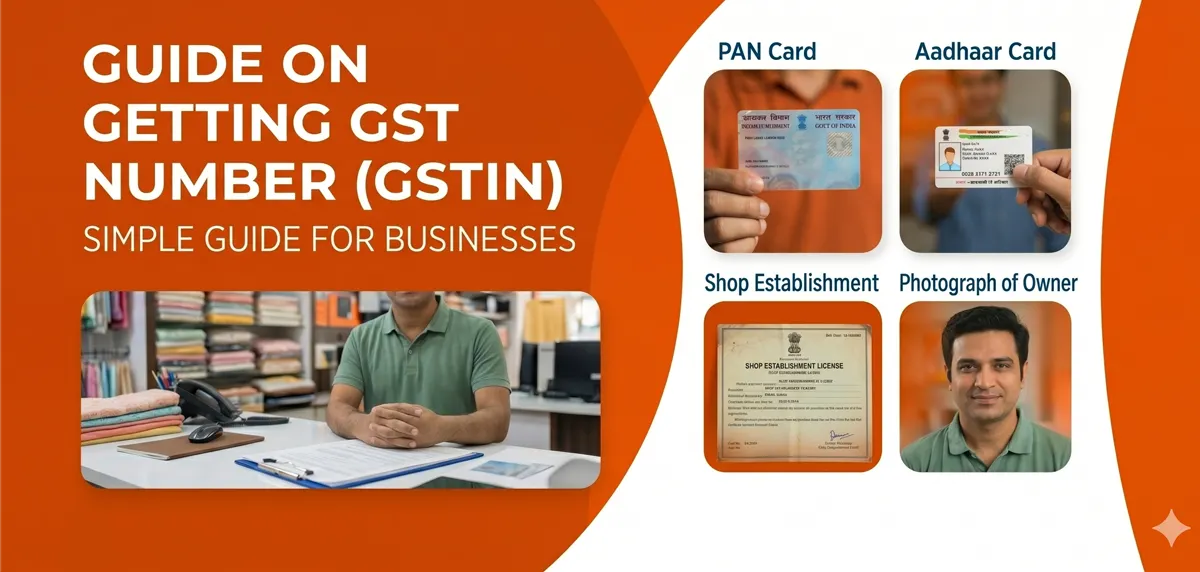





Getting your GST registration is no longer just a compliance task. It directly influences how you invoice clients, claim input tax credit, and even how credible your business looks to vendors and lenders. The process today is fully digital and faster than before, but only if you understand the exact steps and avoid common mistakes. If you approach it casually, small errors in the matching of PAN, address proof, or Aadhaar details can delay your approval.
Let’s understand how to get your GST number, how to check the GST number, and what you need to know before and after registration.
What GST is and Why You Need a GSTIN
What GST is is simple. It is a unified indirect tax that replaced multiple taxes like excise duty, VAT, and service tax for most of the sectors of India that involve financial transactions.
A GSTIN is your business’s unique 15-digit identification number issued after registration. It allows you to collect GST from customers, claim input tax credit, sell across India legally, and register on e-commerce platforms.
Without a valid GST number, you cannot issue GST invoices or claim tax credits.
Documents Required for GST Registration
Before applying for a GSTIN, keep these documents ready:
- PAN card of business or proprietor
- Aadhaar card
- Business address proof, such as electricity bill or rent agreement
- Bank account details such, as cancelled cheque or statement
- Photograph of owners or promoters
Incomplete or mismatched documents are a major reason for rejection.
Step-by-Step Process to Get GST Number
The GST portal flow has become more streamlined.
Here is exactly how you apply:
Step 1 Visit the GST Portal
Go to the official GST website and select Services, then Registration, then New Registration.
Step 2 Fill Part A
Enter PAN, the legal business name that matches PAN, mobile number, and email.
You will receive OTPs for verification.
Step 3 Generate TRN
After OTP verification, you get a Temporary Reference Number which allows you to continue the application later.
Step 4 Fill Part B
Log in using TRN and fill the business details, promoter or partner details, address details, goods or services classification, and bank details.
Step 5 Upload Documents
Upload all required documents in the proper format. Blurry or mismatched files often trigger queries.
Step 6 Aadhaar Authentication
Complete Aadhaar verification using OTP. This speeds up approval and avoids physical verification.
Step 7 Submit Application
Verify using Aadhaar OTP, EVC, or DSC in case of companies.
You will receive an Application Reference Number.
Step 8 Processing and Approval
Approval usually takes three to seven working days. You may receive a notice if clarification is required.
Step 9 Get GSTIN
Once approved, you receive your GSTIN number and registration certificate.
How to Check the GST Number
Before dealing with any vendor, always do a GST number check.
Here is how to check the GST number
Step 1. Visit the GST portal
Step 2. Go to Search Taxpayer
Step 3. Enter GSTIN
Step 4. View details such as business name, registration status, and state
This helps avoid fraud and ensures valid tax credit claims.
Understanding GSTIN Structure
A GSTIN number follows a fixed structure
Part | Meaning |
First 2 digits | State code |
Next 10 digits | PAN |
13th digit | Entity number |
14th digit | Default Z |
Last digit | Check code |
This structure helps identify the taxpayer and location instantly.
Post-Registration Compliance
Getting a GST number is only the beginning. You must file GST returns regularly, issue proper invoices, maintain records, and display GSTIN on invoices and business premises.
Failure to comply leads to penalties or suspension.
Getting your GSTIN today is faster than ever, but only if you follow the process carefully. The portal is efficient, but it does not tolerate careless inputs. Every detail you enter is cross-verified with PAN, Aadhaar, and bank records. It is why preparation matters more than the actual application.
Once you receive your GST number, your responsibility shifts from registration to compliance. Regular filing, proper invoicing, and periodic GST number check for vendors become part of your routine.
If you treat GST as just another formality, it will create problems later. If you use it correctly, it becomes a tool that improves transparency, credibility, and financial efficiency in your business.