Customers
  Distributor
  Join us as an Advisor
  Employee













































 :
:  :
:  :
: 








Key Takeaways
- Term insurance ends when the selected policy term concludes.
- Some plans offer coverage up to 99 years of age.
- Smart Exit and ROP may return eligible premiums differently.

Yes, term life insurance expires when the policy reaches the end of its selected term. If you survive until this date, the life cover normally ends. A standard pure-protection policy does not provide a maturity payout unless the policy specifically includes a return or exit benefit.
However, expiry should not be confused with a policy lapse. Expiry occurs because the agreed coverage period has ended. A lapse generally happens earlier because the required premium was not paid within the permitted time.
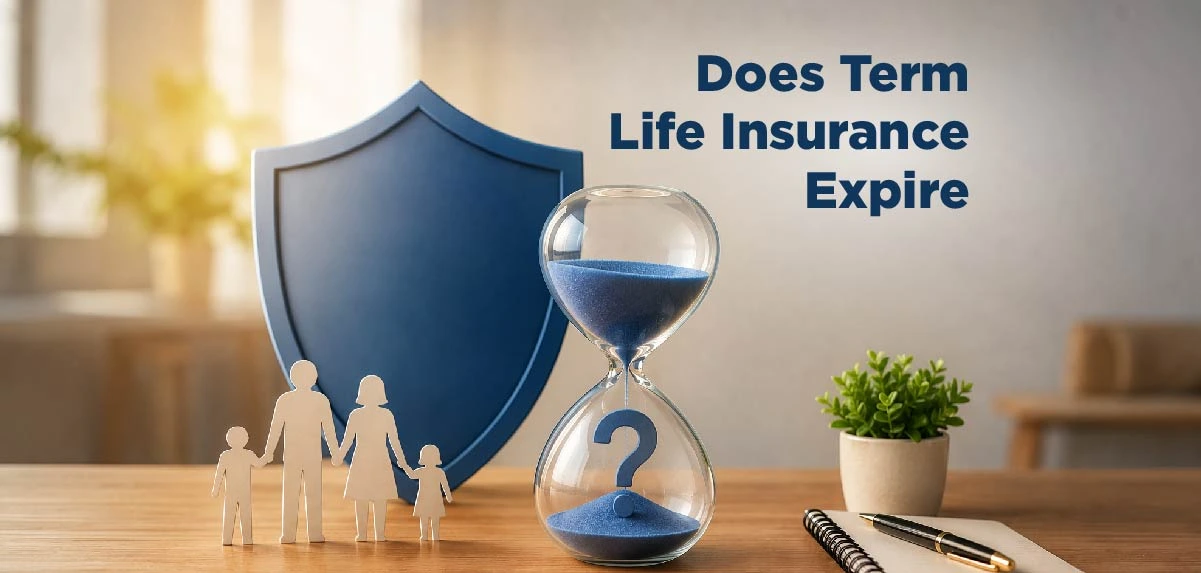
Does Term Life Insurance Expire?
The direct answer to does term life insurance expire is yes. When purchasing the policy, you select how long the insurer will provide life cover. This duration is known as the policy term.
For example, if you purchase a 30-year term plan at age 35, the cover will generally end when you reach age 65. If you die during those 30 years while the policy is active, the applicable death benefit is paid to the nominee. If you survive the term, the cover expires according to the policy conditions.
The expiry date is mentioned in your policy schedule, so you know it when you purchase the cover.
Does a Term Life Insurance Policy Expire Automatically?
If you are asking does a term life insurance policy expire, it generally ends automatically on the maturity or expiry date specified in the policy. You do not usually need to submit a cancellation request.
The policy may also terminate earlier if:
- The life assured dies and the complete death benefit is paid
- The policy lapses because premiums remain unpaid
- You surrender or terminate it where such an option is available
- A Smart Exit benefit is exercised
- Another termination condition in the policy applies
Once the cover ends, a death occurring afterwards is not covered under that policy.
Do Term Life Insurance Policies Expire After the Same Period?
The answer to do term life insurance policies expire after a standard period is no. The available duration differs across products and may also depend on your age at entry, premium-payment option, and maximum maturity age.
Certain plans offer policy terms ranging from five to 81 years. This does not mean every applicant can select an 81-year term. The actual duration available to you depends on your age and the product’s eligibility rules.
For instance, a younger applicant may be eligible for a much longer policy duration than someone purchasing cover later in life.
Does Term Insurance Expire at a Certain Age?
When considering does term insurance expire, you should check both the policy term and the maximum maturity age. The maturity age is the age at which your cover is scheduled to end.
Some products provide coverage up to age 99. If a plan has a maximum maturity age of 99, the selected term must fit between your entry age and that limit. A person entering at age 30 may potentially select a longer duration than someone entering at age 60, subject to the available options.
Coverage up to age 99 can provide near-lifelong protection, but it remains term insurance. A long duration does not automatically create a maturity value or savings benefit.
Does Term Life Insurance Expire at a Certain Age in Every Plan?
The question does term life insurance expire at a certain age has no single answer applicable to every product. One plan may end at age 70 or 80, while another may allow protection up to age 99.
You should select the maturity age based on how long your family may depend on your income. Consider the age at which:
- Your children may become financially independent
- Your home loan and other liabilities may be repaid
- Your spouse may have sufficient retirement resources
- Your major financial commitments may end
- Your accumulated assets may become sufficient for dependants
Choosing the longest available term is not automatically the right decision. Longer protection may increase the premium, so the additional years should address a genuine need.
If you are looking for a term insurance plan with extended life cover, the IndiaFirst Life Elite Term Plan offers coverage up to age 99, subject to applicable eligibility conditions. You can choose the policy term based on your protection needs and compare the available coverage options before purchasing.
What Is the Difference Between Expiry and Policy Lapse?
A policy lapse occurs when the cover stops or policy benefits are affected because you have not paid the required premium within the applicable grace period. This can happen long before the scheduled expiry date.
Situation | What causes it? | What happens to the cover? |
Policy expiry | The selected term ends | Cover concludes as scheduled |
Policy lapse | Premium remains unpaid | Benefits stop or reduce according to policy terms |
Smart Exit | You exercise an eligible exit option | Exit value is paid and the policy terminates |
Death claim | The life assured dies during active cover | Death benefit is paid and the policy terminates |
Depending on the policy, you may be allowed to revive lapsed cover within a specified revival period by paying outstanding premiums and satisfying the insurer’s requirements. Revival is subject to the policy terms and underwriting rules.
What Happens to Your Premiums When the Term Ends?
Under a standard pure-protection term plan, you generally do not receive the premiums back when the policy expires. The premiums paid for the life cover provided during the policy term.
If receiving money upon survival is important to you, you may consider a Return of Premium option. Under a term plan with Return of Premium, the specified percentage of eligible premiums is paid at maturity if you survive the term and the policy conditions have been satisfied.
The amount returned may exclude taxes, rider premiums, extra underwriting premiums, or other components specified by the policy. Return of Premium plans also generally cost more than comparable pure-protection plans.
How Does the Smart Exit Option Work?
Smart Exit is different from waiting for a Return of Premium policy to mature. Under an eligible Life Cover option, Smart Exit may allow you to leave the policy during a specified window and receive an amount equal to the total premiums paid, subject to its conditions.
For example, an eligible Smart Exit facility may require:
- The policy to be active on the exercise date
- All premiums due to have been paid
- The insured person to be between ages 60 and 70
- Completion of at least 30 policy years
- The option not to be exercised during the final five policy years
Once the Smart Exit value is paid, the policy terminates and the life cover ends. Availability and conditions vary, so you should read the applicable policy wording before relying on this option.
Is ₹1 Crore Term Insurance Enough Until Expiry?
Whether 1 crore term insurance is sufficient depends on your household expenses, income, debts, dependants, and future financial goals. The amount may appear substantial today but could lose purchasing power over a long policy term because of inflation.
When assessing 1 crore term insurance, consider the income your family may need until your children become independent, as well as home loan repayments, education expenses, and other liabilities. Subtract only those existing assets that would genuinely be available to your dependants.
How Can a Term Life Insurance Calculator Help?
A term life insurance calculator can estimate the cover you may need and the premium applicable to different policy terms. You can compare how coverage until age 70, 80, or 99 may influence the estimated premium.
A term life insurance calculator can also help you assess whether a higher sum assured or longer term remains affordable. The result is indicative because the final premium depends on underwriting, health, lifestyle, and product conditions.
Before You Go
Every year you wait can make life insurance more expensive. The cost of leaving your family financially unprotected could be far greater.
Calculate Your Ideal Life Cover
Conclusion
A term policy is designed to expire, but you decide its duration when purchasing it. The right term should continue until your family can manage without depending on your future income.
Before choosing a policy, compare the available duration, maximum maturity age, premium, and exit benefits. Whether you select pure protection, Return of Premium, or an eligible Smart Exit option, ensure you understand exactly when the cover ends and what, if anything, becomes payable when it does.