Losing someone is painful enough. The thought of dealing with their loans, EMIs, or credit card bills can feel overwhelming in the middle of the grief you are going through. However, the family does not have to take care of all the debts. And even when the debts do pass to the family, there are specific rules.
What Happens to a Deceased’s Loans and Debts After Their Death?
When someone passes away, their loans and debts are assessed by lenders and compared to the deceased individual’s estate to recover the outstanding amount.
-
Secured Loans (such as a car loan and home loan)
These loans have collateral attached, which means the asset in question (such as the car or the home) is pledged against the loan.
These loans may be settled as follows:
Banks will first attempt to recover dues from the secured asset (home/car).
Legal heirs can continue EMIs if they want to retain the asset.
If heirs cannot or do not wish to continue, the lender has the right to sell the asset and recover the outstanding amount.
-
Unsecured Loans (such as a personal Loan, credit Line, and consumer durable loan)
These loans have no collateral, and hence, their settlement may occur as follows:
Banks can claim repayment only from the estate, not from the family’s personal funds.
If there are no assets, the bank usually writes it off unless there is a guarantor or co-borrower.
Families should not feel pressured to pay these dues unless legally required.
-
Credit Card Dues
The rules for dealing with credit card debt are similar to those for an unsecured loan. However, there are some minor specifics to keep in mind:
Banks can request settlement from the deceased’s estate, not from surviving family members.
If there was a secondary cardholder, they would usually not be considered liable, as they are only users, not borrowers.
If the card had any insurance cover (some cards include accidental death cover), families can check and claim it if it is applicable to the respective situation.
Co-Borrowers and Guarantors: Their Role in the Process
When a borrower passes away, the responsibility for ongoing EMIs depends largely on whether someone else was connected to the loan as a joint borrower or guarantor.
-
If the loan was taken jointly:
The surviving co-borrower becomes fully responsible for future EMIs. They can provide income documents and request the bank to revise repayment terms.
-
If the loan had a guarantor, they step in only when:
The borrower passes away, and there are insufficient assets to recover dues. Banks can legally ask the guarantor to repay.
-
What You Can Do as a Co-Borrower or a Guarantor
If you had held a joint loan with the deceased or were a guarantor for their loan, you may want to request the bank for a settlement. This may be especially crucial if the estate’s value is lower than the debt. In addition, chances are your family is going through financial hardship after the loved one’s passing.
When negotiating with the bank, consider these points:
Ask for a reduced settlement amount on humanitarian grounds.
Request for the penal interest or late fees to be waived.
Provide the bank with the necessary documents (death certificate, succession proof) to ensure they are up to date with what has occurred.
Put all communication in writing to avoid future complications.
When you are going through a difficult stage of grief, dealing with these processes can feel heavy. However, having a clear understanding of these rules can help families approach the financial institution calmly and explore solutions that come with the least amount of stress.
Nominee vs Legal Heir: Who Is Actually Responsible?
When a person passes away, many families assume the nominee becomes responsible for the debts. However, that is not always the case.
In most financial cases, a nominee is only a caretaker, someone appointed to receive assets on behalf of the legal heirs.
A legal heir, on the other hand, is the person who has the rightful claim to the deceased’s estate. The legal heir not only inherits the assets but also the liabilities. However, a point to note here is that the deceased’s liabilities will be cleared from the assets inherited, not from the heir’s personal savings.
In the absence of a legal heir, the deceased’s assets are transferred as per prevailing succession laws.
So, to summarise each one’s role -
If the deceased leaves behind no assets, the loan may be declared as a loss by the bank, except in cases involving co-borrowers or guarantors.
Loan Protection Insurance: Protecting Loved Ones from Debt
Loan protection insurance can ensure loved ones do not have to worry about pending loans.
With a loan protection plan, when the borrower passes away, the insurance provider ensures that the outstanding loan is paid off entirely or partially upon the borrower’s death (as per the policy’s contract). This allows the grieving family to continue their life without financial worries.
In case of secured loans (home/car), the asset remains with the heirs instead of being repossessed by the lender.
Hence, if your loved one has passed away, check:
If they had opted for a loan protection plan.
Whether it covers natural death/accidental death.
What documents (death certificate, loan statements, policy details) are needed to file the claim.
This one small step can save families from financial stress.
Small Steps Families Can Take to Close or Settle Loans Smoothly
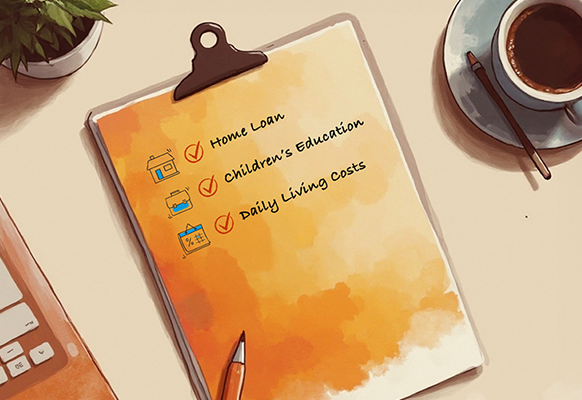
Here is a calm, step-by-step checklist to help families manage loan closure without panic:
Collect documents: death certificate, loan details, ID proofs, nominations, and account statements.
Notify all lenders in writing.
Check for loan-protection insurance or existing life insurance that may cover debts.
Understand your liability. Know if you are a legal heir, nominee, co-borrower, or guarantor.
For secured loans, decide whether to continue EMIs or let the bank recover from the asset.
For unsecured loans or credit cards, settle dues only from the estate, not personal funds.
Request a settlement if the loan amount is high or the estate is small.
Obtain a No Dues Certificate from the lender after settlement.
Keep a file of all communication for future clarity.
A Final Word
Debt after death can feel like a heavy burden during an already difficult time. But you are not alone, and you are not expected to shoulder everything.
With the right information, from understanding your legal role, knowing which loans actually pass on, checking for insurance, and approaching banks calmly, you can swim through these waters with clarity and dignity.