Customers
  Distributor
  Join us as an Advisor
  Employee













































 :
:  :
:  :
: 









Key Takeaways
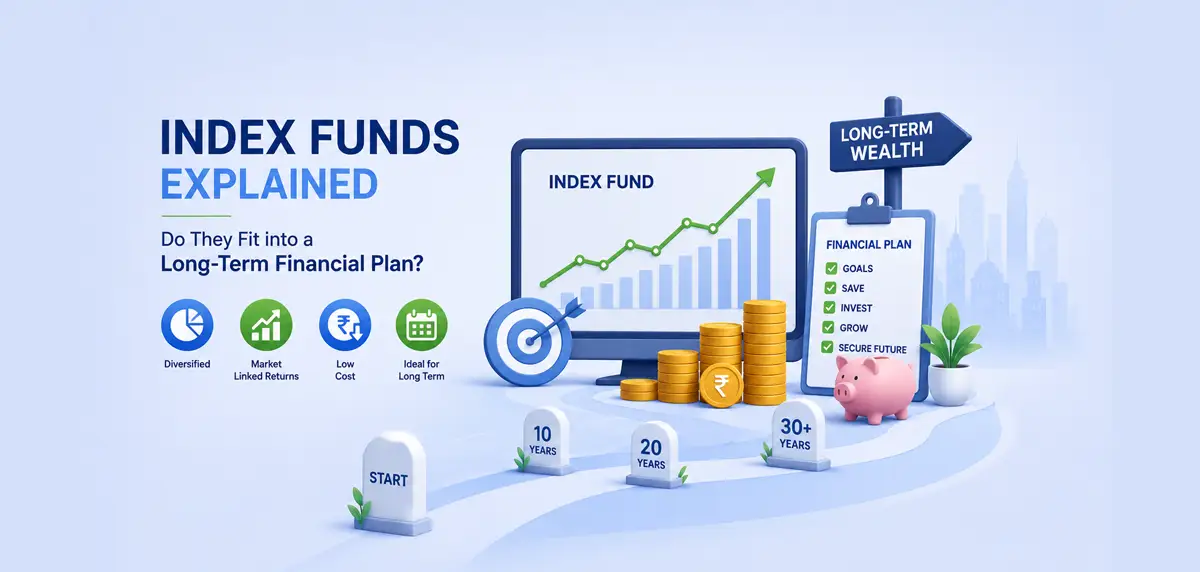
- Index funds provide diversified and low-cost market exposure, making them suitable for long-term wealth creation and disciplined investing through SIPs.
- Unlike ULIPs and pension plans, index funds focus purely on market-linked growth and do not offer life insurance protection or guaranteed income benefits.
- A balanced financial strategy may combine index funds, insurance plans, emergency savings, and retirement-focused products to improve overall financial stability and protection.
- Before investing, you should assess your financial goals, risk tolerance, investment horizon, and protection requirements carefully.
Building long-term wealth involves much more than simply saving money in a bank account. With rising inflation, evolving financial goals, and increasing awareness about market-linked investing, many individuals are exploring smarter ways to grow their money over time. Among the various options available, index funds have emerged as one of the most popular investment choices for both beginners and experienced investors.
However, before investing, an important question arises: Do index funds truly fit into a long-term financial plan? The answer depends on your financial goals, risk appetite, investment horizon, and the role you expect your investments to play. While index funds offer market-linked growth and diversification, they differ significantly from insurance-backed products such as ULIPs and pension plans that combine investment with financial protection.
This guide explains what index funds are, how they work, their benefits and risks, and how they compare with other long term investment plans to help you make informed financial decisions.
What are Index Funds?
To understand what index funds are, you first need to understand what is an index in investing.
An index is a benchmark that tracks the performance of a group of stocks representing a particular market or sector. Examples include the Nifty 50 and Sensex in India.
An index fund is a mutual fund designed to replicate the performance of a specific market index. Instead of trying to outperform the market through active stock selection, index funds passively invest in the same securities that form part of the benchmark index.
For example, if an index fund tracks the Nifty 50, it invests in the same 50 companies in similar proportions.
This passive investment approach makes index funds simple, transparent, and cost-efficient.
How Do Index Funds Work?
Index funds function by purchasing and holding securities that are part of the underlying benchmark index.
Here is a simplified explanation of how they operate:
1. The fund identifies a benchmark index.
2. It invests in the same companies included in the index.
3. The allocation mirrors the index composition.
4. Returns move in line with the index performance.
Since there is minimal active management involved, operational costs remain lower compared to actively managed mutual funds.
For instance, if the Nifty 50 rises by 10%, a Nifty index fund is also expected to generate nearly similar returns after deducting fund expenses.
Why are Index Funds Becoming Popular?
Index funds have gained popularity because they offer a combination of simplicity, diversification, and affordability.
Key reasons include:
- Lower expense ratios
- Broad market exposure
- Reduced dependency on fund manager decisions
- Long-term wealth creation potential
- Easy accessibility through SIPs and online platforms
For investors seeking disciplined and passive investing, index funds can serve as an effective component of their broader investment plans.
Benefits of Index Funds in Long-Term Investing
1. Diversification
One of the biggest advantages of index funds is diversification.
Instead of investing in a single stock, you gain exposure to multiple companies across sectors. This reduces concentration risk and helps balance portfolio volatility.
2. Cost Efficiency
Since index funds are passively managed, they generally have lower management fees compared to actively managed funds.
Over long investment periods, lower costs can significantly improve net returns.
3. Simplicity
Index funds are easy to understand and suitable even for first-time investors.
You do not need extensive market expertise to begin investing.
4. Long-Term Growth Potential
Historically, equity markets have delivered inflation-beating returns over long periods. Index funds aim to capture this overall market growth.
This makes them suitable for long-term financial goals such as:
- Retirement planning
- Child’s education
- Wealth accumulation
- Financial independence
5. Transparency
Since index funds follow publicly available indices, investors can easily track their holdings and performance.
Risks Associated with Index Funds
While index funds offer several advantages, they are not risk-free.
Market Risk
Index funds are directly linked to stock market performance. If markets decline, the fund value also falls.
No Capital Protection
Unlike traditional insurance-backed products or guaranteed-return plans, index funds do not provide guaranteed returns or principal protection.
Volatility
Short-term market fluctuations can impact returns significantly.
This is why index funds are generally considered more suitable for long-term investors who can tolerate market volatility.
Role of Index Funds in Investment Planning
Understanding what is investment planning is essential before choosing any financial product.
Investment planning involves aligning your financial goals, risk tolerance, income, and time horizon with suitable investment instruments.
Index funds can play an important role in this process because they help create long-term market exposure at relatively lower costs.
However, they are typically considered only one component of a diversified financial strategy rather than a complete solution.
A balanced financial plan may include:
- Index funds for market-linked growth
- Emergency savings for liquidity
- Health insurance for medical protection
- Life insurance for financial security
- Pension plans for retirement income stability
Using an investment calculator can help estimate expected returns from index fund investments over different time horizons.
Index Funds vs Actively Managed Funds
The following comparison helps differentiate index funds from actively managed mutual funds:
Feature | Index Funds | Actively Managed Funds |
Investment Style | Passive | Active |
Objective | Match index performance | Beat market returns |
Expense Ratio | Lower | Higher |
Fund Manager Role | Minimal | Significant |
Risk Level | Market-linked | Depends on strategy |
Portfolio Turnover | Lower | Higher |
Transparency | High | Moderate |
Both options serve different investor preferences and financial strategies.
Index Funds vs ULIPs vs Pension Plans: Key Differences
When evaluating long term investment plans, many investors compare index funds with pension plans and insurance-backed products such as ULIPs.
The following table provides an educational comparison:
Feature | Index Funds | ULIPs | Pension Plans |
Primary Purpose | Wealth creation | Investment + insurance | Retirement income |
Risk Profile | Market-linked | Market-linked with insurance | Moderate to low |
Life Cover | No protection | Includes life insurance | May include protection benefits |
Returns | Based on index performance | Based on chosen fund performance | Depends on plan type |
Lock-in Period | Minimal/varies | Usually 5 years | Long-term |
Liquidity | High | Moderate | Limited until retirement |
Cost Structure | Lower expenses | Includes policy charges | Includes administrative charges |
Ideal For | Growth-focused investors | Investors seeking protection + growth | Retirement-focused individuals |
Understanding Protection vs Pure Investment
A major distinction between index funds and insurance-based investments lies in financial protection, income security, and long-term financial stability. While all these instruments may contribute to wealth creation, their objectives and features differ significantly.
Index Funds
- Focus primarily on market-linked wealth creation
- Returns depend on overall index performance
- No life insurance or protection component
- No guaranteed payouts or fixed maturity value
- Suitable for long-term investors comfortable with market fluctuations
ULIPs (Unit Linked Insurance Plans)
- ULIPs (Unit Linked Insurance Plans) combines investment with life insurance cover
- Offer exposure to equity, debt, or balanced funds
- Provide market-linked growth opportunities
- Allow partial switching between fund options
- Suitable for individuals seeking both protection and investment benefits
Pension Plans
- Pension Plans are designed mainly for retirement income planning
- Encourage disciplined long-term savings habits
- May provide regular annuity income after retirement
- Generally involve longer lock-in periods
- Suitable for individuals focused on post-retirement financial security
Term Insurance Plans
- Term Insurance Plans are pure protection-oriented financial products
- Provide financial support to dependents in case of unforeseen events
- Do not offer investment returns or wealth creation benefits
- Usually come with affordable premiums and high coverage
- Suitable for income protection and family security planning
Traditional Savings Insurance Plans
- Offer relatively stable and predictable returns
- Include insurance coverage along with savings benefits
- Lower market risk compared to equity-linked investments
- Suitable for conservative investors seeking stability
- Can support medium- to long-term financial goals
Hybrid Financial Planning Approach
- Many investors combine index funds with insurance products
- Index funds may support long-term capital growth
- Insurance plans help provide financial protection and income stability
- Diversification across products helps balance risk and security
- Suitable for creating a more comprehensive long-term financial plan
Therefore, index funds may contribute significantly to wealth creation, but they do not replace the protection and financial security offered by insurance-based products.
Who Should Consider Investing in Index Funds?
Index funds may suit investors who:
- Have long investment horizons
- Can tolerate market fluctuations
- Prefer passive investing
- Want low-cost market exposure
- Seek portfolio diversification
They are commonly used by individuals planning for goals 10–20 years away.
Who May Prefer Insurance-Based Investment Options?
ULIPs or pension-oriented products may suit individuals who:
- Want life insurance along with investments
- Prefer structured retirement planning
- Seek disciplined long-term savings
- Want financial protection for dependents
These products are often selected as part of comprehensive investment plans focused on both wealth creation and security.
Can Index Funds and Insurance Plans Coexist?
Yes. In fact, many financial experts recommend combining different asset classes and financial instruments instead of relying entirely on a single option.
For example:
- Index funds may provide long-term growth potential.
- Health insurance protects against medical emergencies.
- Term insurance protects family income.
- Pension plans support retirement income needs.
This diversified approach helps manage both growth opportunities and financial uncertainties more effectively.
How SIPs Improve Long-Term Investing in Index Funds
Many investors choose Systematic Investment Plans (SIPs) while investing in index funds.
SIPs allow you to invest fixed amounts regularly instead of making lump-sum investments.
Benefits of SIP investing include:
- Rupee cost averaging
- Investment discipline
- Reduced impact of market timing
- Long-term compounding benefits
An investment calculator or SIP calculator can help estimate how monthly SIP contributions may grow over time.
For example, investing ₹10,000 monthly in an index fund over 20 years may create a substantial corpus depending on market performance.
Important Factors to Consider Before Investing
Before selecting index funds as part of your financial strategy, evaluate the following:
Financial Goals
Identify whether your objective is wealth creation, retirement planning, or income generation.
Risk Appetite
Index funds are equity-oriented and may experience market volatility.
Time Horizon
Longer investment periods generally help manage short-term market fluctuations better.
Asset Allocation
Avoid concentrating all investments in a single product category.
Protection Requirements
Ensure your financial plan includes adequate insurance coverage alongside investments.
Final Thoughts
Index funds have transformed investing by making market participation simple, transparent, and affordable. They provide diversified exposure, lower costs, and the potential for long-term wealth creation, making them an important option within modern long term investment plans.
Pension plans and insurance-based products such as ULIPs serve different purposes by combining investment features with protection and retirement-focused benefits.
Rather than viewing these options as competitors, investors may consider them as complementary components of a diversified financial strategy. A balanced approach that combines growth-oriented investments with protection-oriented products can help create a more resilient and goal-oriented financial plan over the long term.