Customers
  Distributor
  Join us as an Advisor
  Employee













































 :
:  :
:  :
: 









Key Takeaways
- Existing fixed premiums generally remain unchanged despite rising inflation.
- Economic conditions can influence pricing for newly issued policies.
- Inflation can reduce the future purchasing power of cover.

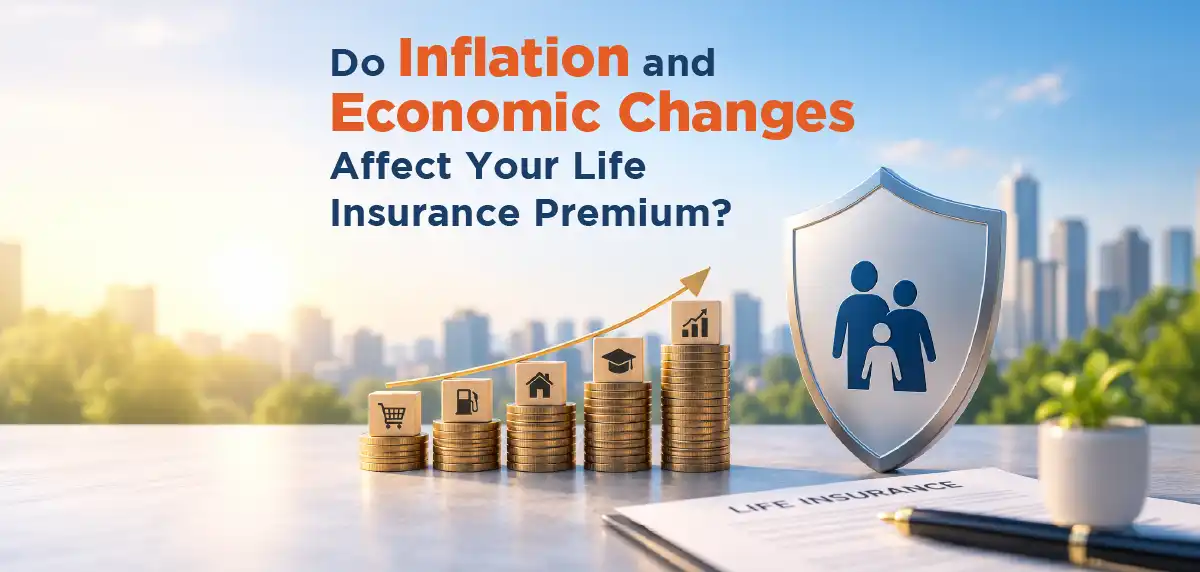
Inflation can make groceries, education, healthcare and housing more expensive, but it does not automatically increase every payment in your budget. If you own a life insurance policy with a fixed premium, the insurer generally cannot raise that contractual premium merely because prices or interest rates change. The less obvious concern is that your payment may stay fixed while the protection loses real value.
Economic conditions matter more when an insurer prices a new policy. Mortality expectations, investment income, expenses and reinsurance costs can shape life insurance premiums for new applicants. This distinction separates the cost of retaining cover from the adequacy and cost of buying protection today.
How Does Inflation Affect an Existing Life Insurance Policy?
Under a level-premium policy, the insurer determines your premium using factors such as age, health, smoking status, occupation, cover amount, term and benefits. Once issued, life insurance premiums normally follow the schedule in the policy document instead of moving with inflation.
However, check the terms. Premiums for some renewable covers, group arrangements or optional benefits may be reviewed at renewal. Your total payment could also change if taxes or statutory levies are revised. Such adjustments are contractual or regulatory, not a direct inflation-linked increase in the base premium.
How Does the Economy Affect Life Insurance Premiums for New Buyers?
If you are asking, “How does the economy affect life insurance premiums?”, the answer lies in several indirect channels. Insurers do not simply add the inflation rate to your price. They assess long-term risks and the cost of maintaining promised protection.
- Operating expenses can make medical examinations, distribution and policy servicing costlier.
- Reinsurance prices may rise when insurers reassess mortality or capital requirements.
- Interest rates and bond yields affect investment returns, pricing and guarantees.
- Claims, regulation, taxes and competition can influence new-policy rates.
These factors work together, so inflation does not always mean life insurance premiums will rise. Investment yields or competition may offset cost pressure. Pricing can also change during moderate inflation if claims or reinsurance costs increase.
Can Inflation Reduce the Value of Your Life Cover?
Yes. This may matter more to your family than whether the premium changes. A ₹1 crore benefit may appear substantial today, but it will not purchase the same goods and services decades later. At an assumed inflation rate of 6%, ₹1 crore received after 20 years would have purchasing power roughly equivalent to ₹31 lakh today.
Review whether your life insurance cover can still support household expenses, education, liabilities and income replacement. Your existing life insurance policy may remain affordable while gradually becoming insufficient for its original purpose.
Do Economic Slowdowns Affect Your Ability to Pay Premiums?
A slowdown does not usually alter your contracted premium, but it can affect your income. If money becomes tight, do not let your life insurance policy lapse without checking the consequences. Replacement cover may cost more because you will be older and your health may have changed.
Review your payment frequency, grace period and any available revival options. Contact the insurer before missing a payment, as conditions vary by plan. Include life insurance premiums among essential protection expenses in your household budget.
How Can You Protect Your Cover Against Inflation?
Estimate the future value of your family’s needs. Include outstanding loans, years of income to replace, major goals and existing assets. Depending on your needs, you could consider a higher sum assured, additional cover later or a feature that increases protection at life stages, subject to policy terms.
Review your life insurance after marriage, childbirth, a home purchase or an income change. Reviews can reveal an inflation-created gap. Compare the additional life insurance premiums with the extra protection instead of cancelling useful existing cover. A fresh application may involve new underwriting and different terms. A calculator can estimate life insurance premiums, but your final quote depends on underwriting and product conditions.
Before You Go
Inflation may not change the scheduled premium on your existing plan, but delaying adequate cover can mean applying at an older age. Compare the potential cost with your family’s current financial needs.
Check Your Monthly Premium
Conclusion
When the economy changes, ask two questions. Can the amount payable under your contract change? Would the benefit still fund the future you intended to protect? With many fixed-premium plans, the first answer may be no while the second gradually becomes yes. A periodic cover review is therefore more useful than reacting to every inflation announcement or interest-rate move.