Customers
  Distributor
  Join us as an Advisor
  Employee













































 :
:  :
:  :
: 








Key Takeaways
- Prepaid insurance involves paying the premium upfront for a future coverage period, eliminating the need for recurring payments and ensuring continuous protection.
- This approach simplifies financial planning and reduces the risk of policy lapses.
- Prepaid insurance is especially relevant in life insurance to maintain uninterrupted coverage, and it suits individuals who prefer clear, upfront financial commitments, though it requires sufficient financial flexibility.
Insurance is usually thought of as something that requires regular payments. You pay a premium every month or year, and the coverage continues as long as those payments are made. That is the structure most people are familiar with, so anything outside of that can feel slightly unfamiliar at first.
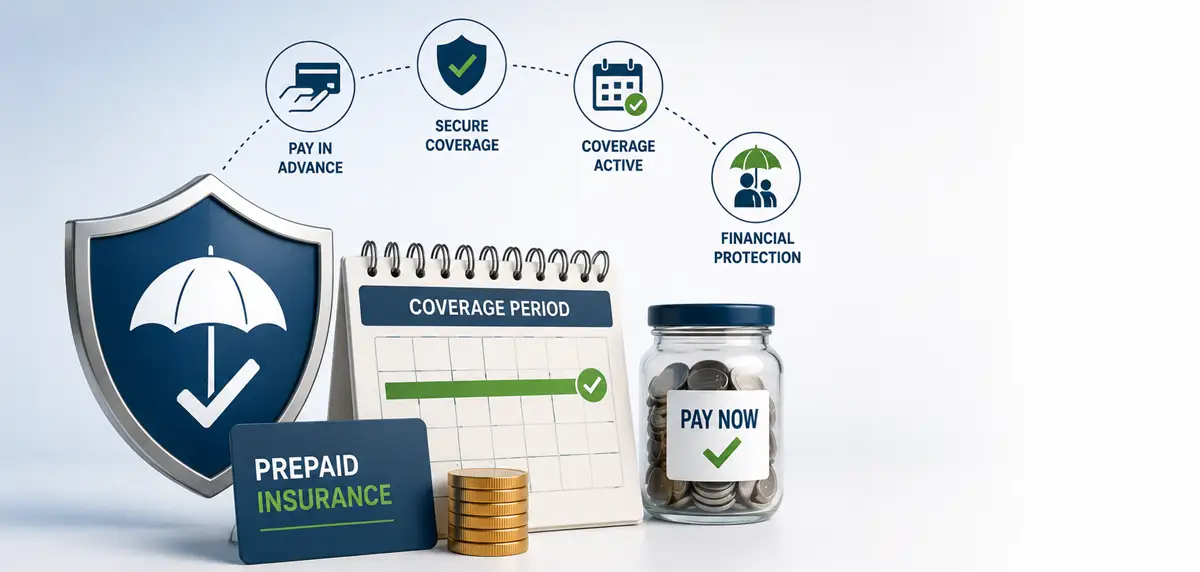
Prepaid insurance works a little differently. Instead of spreading payments across time, the premium is paid in advance for a future period of coverage. For someone trying to understand what is prepaid insurance, it can be seen as paying upfront so that the policy continues without needing repeated payments later.
What is Prepaid Insurance?
Prepaid insurance refers to a situation where the premium is paid before the coverage period begins. The insurer receives the payment upfront, but the coverage is provided over the duration of the policy. This creates a difference between when the payment is made and when the benefit is actually used.
In simple terms, a prepaid insurance policy removes the need for ongoing payments. Once the premium is paid, the policy remains active for the agreed term. This makes it easier for some individuals to manage their policies without having to track recurring payments.
How Prepaid Insurance Works
The working of prepaid insurance is straightforward, but it is often misunderstood because of how different it feels from regular premium structures. When someone opts for a prepaid insurance plan, they pay the premium for a defined period in advance.
After that, the insurer continues to provide coverage over time. The benefit is not received all at once, even though the payment is made upfront. Instead, the coverage is spread across the policy term, just as it would be in a regular plan.
This approach reduces the need to remember payment dates or worry about missing instalments.
Why Prepaid Insurance is Considered Important
The importance of prepaid insurance becomes clearer when you look at it from a practical point of view. One of the main concerns with insurance policies is the risk of missing payments, which can lead to lapses in coverage.
By paying the premium in advance, this risk is reduced. The policy continues without interruption, and there is no need to manage periodic payments. For many people, this adds a level of certainty that fits well within their financial planning approach.
It also helps in organising expenses more clearly, since a portion of future obligations is handled upfront.
Prepaid Insurance in the Context of Life Insurance
Prepaid insurance is often discussed in relation to life insurance, where continuity of coverage matters more than anything else. A life insurance policy is meant to provide financial support to dependents, so keeping it active is important.
In this context, a prepaid insurance policy ensures that the coverage remains in place for the chosen term without the need for repeated payments. This can make long-term planning simpler, especially when the goal is to maintain uninterrupted protection.
Understanding what prepaid insurance within life insurance is helps clarify how payment flexibility can vary across policies.
Types of Life Insurance and Their Relevance
There are different types of life insurance available, and each comes with its own structure and purpose. Some are designed purely for protection, while others may include additional elements.
A term life policy is one of the simpler forms of life insurance, where coverage is provided for a specific period. In such cases, the way premiums are paid can influence how the policy is managed over time.
While not every policy is structured as a prepaid insurance plan, the option of paying in advance can still be relevant depending on individual preferences.
Role of the Proposer in Insurance
Every insurance policy involves a proposer in insurance, which refers to the person who purchases the policy and agrees to its terms. The proposer is responsible for making decisions related to the policy, including how premiums are paid.
In the case of a prepaid insurance plan, the proposer chooses to pay the premium in advance. This decision is usually based on financial planning considerations and the ability to commit funds upfront.
Understanding the role of the proposer in insurance helps clarify who manages the policy and its financial aspects.
Prepaid Insurance and Financial Planning
Prepaid insurance can fit into financial planning in different ways. For some individuals, paying in advance makes it easier to manage future expenses because it reduces recurring commitments.
It can also help in maintaining discipline, since the payment is already made and the coverage continues without additional effort. This approach may suit those who prefer clarity in their financial commitments.
At the same time, it requires careful planning, since funds are allocated upfront instead of being spread out.
Advantages of a Prepaid Insurance Plan
A prepaid insurance plan offers a few practical advantages, especially for those who prefer a simplified approach to managing policies.
- Payments are made in advance, so there is no need to track recurring schedules
- Coverage continues without the risk of missing instalments
- Financial commitments become easier to plan over time
These benefits are not about higher returns or added features, but about how the policy fits into everyday financial management.
Points to Consider Before Choosing Prepaid Insurance
Even though prepaid insurance offers convenience, it may not suit everyone. Paying premiums in advance requires sufficient financial flexibility, which may not always be practical.
It is also important to consider how long the coverage lasts and whether committing funds upfront aligns with overall financial goals. Comparing options using tools such as a term insurance calculator can help in understanding the overall cost.
Taking time to evaluate these aspects can help in choosing the right prepaid insurance policy.
How Prepaid Insurance Differs from Regular Premium Plans
The difference between prepaid insurance and regular plans comes down to timing. In regular plans, premiums are paid periodically, which spreads the cost over time.
In a prepaid insurance plan, the payment is made upfront for a defined period. The coverage remains the same, but the way payments are handled changes how the policy is experienced.
This distinction becomes important when deciding which structure fits better within a financial plan.
Conclusion
Prepaid insurance offers an alternative way to approach insurance payments. Instead of managing premiums over time, it shifts the responsibility to the beginning of the policy.
For someone trying to understand what prepaid insurance is, the concept is simple once the structure is clear. It is less about changing what insurance does and more about changing how it is paid for and managed over time.