Customers
  Distributor
  Join us as an Advisor
  Employee













































 :
:  :
:  :
: 






Key Takeaways
- Gathering the documents required to file ITR before starting the process helps ensure accurate income reporting, correct tax credit claims, and smoother return filing with fewer errors.
- Key documents include PAN, Aadhaar, Form 16, Form 26AS, AIS/TIS, bank statements, capital gains reports, home loan certificates, and proofs for deductions such as insurance premiums, EPF contributions, and donations.
- Reviewing all records early, using an income tax calculator to estimate tax liability, and avoiding a last-minute rush before the ITR filing last date can help prevent mistakes and delays in processing refunds.
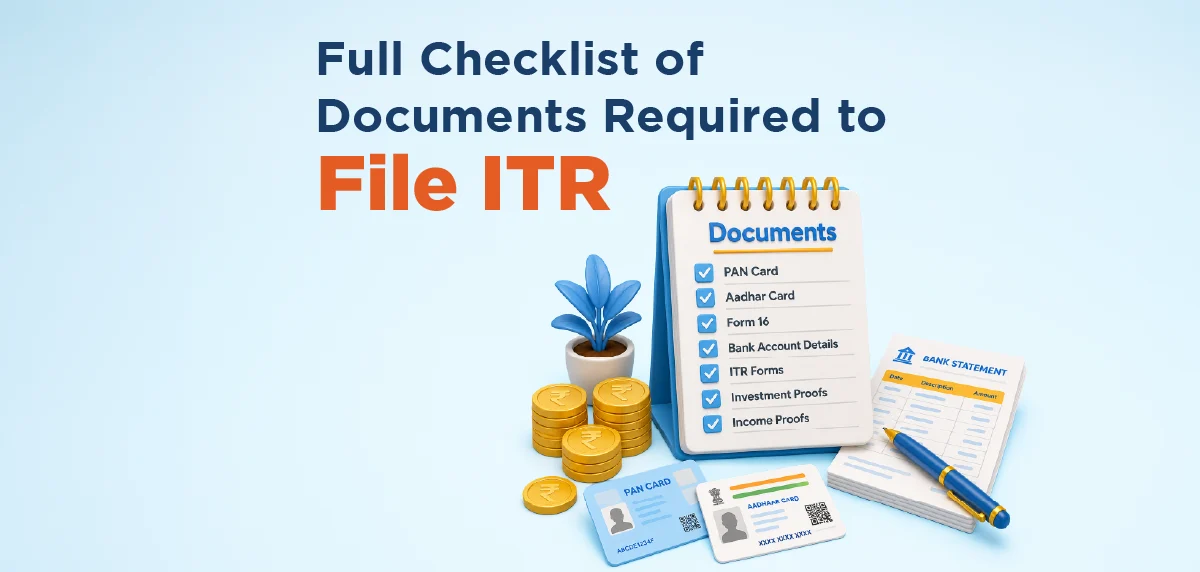
Every year, millions of taxpayers sit down to file ITR only to realize that an important document is missing. A forgotten interest certificate, an overlooked capital gains statement, or an unreported source of income can delay the filing process and even lead to notices later. While many taxpayers focus on selecting the correct return form, the real foundation of accurate tax compliance lies in gathering the right paperwork before starting the process.
Understanding the documents required to file ITR can save you time, reduce errors, and help ensure that your return reflects your complete financial picture. Whether you are a salaried employee, freelancer, business owner, retiree, or investor, having the right records ready before filing can make the process significantly smoother.
What Is ITR and Why Do Documents Matter?
Before discussing the checklist, it helps to understand what is ITR. An Income Tax Return (ITR) is a form through which you report your income, deductions, taxes paid, and tax liability to the Income Tax Department.
While the tax portal pre-fills some information, it does not eliminate the need for supporting records. Many taxpayers assume that the information appearing in their Annual Information Statement (AIS) is sufficient. However, discrepancies can arise due to delayed reporting, multiple income sources, or incomplete disclosures.
That is why the documents required to file ITR remain important even in a highly digitized filing environment.
Basic Documents Required for All Taxpayers
Certain records form the foundation of almost every return.
PAN Card
Your Permanent Account Number is the primary identifier for tax purposes. Ensure that your PAN details are accurate and linked with Aadhaar.
Aadhaar Card
Aadhaar is required for verification and authentication during the filing process.
Bank Account Details
You should keep the following information ready:
- Account number
- IFSC code
- Bank name
- Account type
Correct bank details ensure timely processing of refunds.
Form 26AS
Form 26AS contains information regarding:
- Tax deducted at source (TDS)
- Tax collected at source (TCS)
- Advance tax payments
- Self-assessment tax payments
This is one of the most important income tax return filing documents because it helps verify taxes already credited to your account.
AIS and TIS
The Annual Information Statement (AIS) and Taxpayer Information Summary (TIS) provide details regarding:
- Interest income
- Dividend income
- Securities transactions
- Mutual fund transactions
- Foreign remittances
These records help cross-check income disclosures.
Documents Required for Salaried Employees
If you earn salary income, additional records become necessary.
Form 16
Form 16 is among the most important income tax return documents needed by salaried taxpayers.
It includes:
- Salary paid during the year
- Exempt allowances
- Tax deducted by the employer
- Deductions claimed through the employer
Salary Slips
Monthly salary slips help reconcile income reported in Form 16 and identify any discrepancies.
Leave Travel and Allowance Records
If exemptions have been claimed, supporting documentation should be maintained for future reference.
These are often considered essential documents required for income tax return preparation for salaried individuals.
Documents Required for Interest Income
Many taxpayers overlook interest income while filing returns.
You should collect:
- Savings account interest certificates
- Fixed deposit interest certificates
- Recurring deposit statements
- Post office deposit statements
Banks may deduct TDS on certain interest payments, making these records valuable documents required to fill ITR accurately.
Documents Required for Capital Gains Reporting
Investors need a more extensive documentation set.
Equity Investments
Keep:
- Broker statements
- Trade confirmations
- Capital gains reports
- Demat account statements
Mutual Funds
Collect:
- Consolidated account statements
- Redemption statements
- Capital gains statements
Property Transactions
If you sold property during the year, maintain:
- Purchase deed
- Sale deed
- Improvement cost records
- Registration documents
These records are crucial ITR file required documents when reporting capital gains.
Documents Required for House Property Income
If you own property that generates rental income, additional documentation becomes necessary.
Rental Agreements
Rental agreements establish the amount of income received during the financial year.
Rent Receipts
These provide supporting evidence for income reported.
Municipal Tax Receipts
Property taxes paid may be eligible for deductions while calculating taxable income.
Home Loan Documents
Maintain:
- Loan sanction letter
- Interest certificate
- Principal repayment certificate
Such records often form part of the ITR documents required for property owners.
Documents Required for Business Owners and Freelancers
Business income requires more comprehensive record-keeping.
Profit and Loss Statements
These summarize revenue and expenses during the financial year.
Balance Sheet
A balance sheet provides a snapshot of assets and liabilities.
GST Records
Where applicable, GST returns and invoices help reconcile turnover figures.
Expense Records
Maintain records for:
- Office rent
- Utilities
- Professional fees
- Travel expenses
- Software subscriptions
For self-employed individuals, these become critical documents required to file income tax return correctly.
Documents Required for Claiming Deductions
Tax-saving investments and expenses must be supported by proper records.
Section 80C Investments
Keep proof of:
- Public Provident Fund (PPF)
- Employees' Provident Fund (EPF)
- Life insurance premiums
- ELSS investments
- National Savings Certificates
Health Insurance Premiums
For Section 80D deductions, maintain premium payment receipts.
Education Loan Interest
Interest certificates issued by lenders support deductions under Section 80E.
Donations
Receipts from eligible charitable institutions are necessary for claiming deductions under Section 80G.
These records form a major part of the ITR filing requirements for taxpayers claiming tax benefits.
Documents Required for Foreign Income and Assets
Taxpayers with international financial interests need additional disclosures.
Maintain:
- Foreign bank account statements
- Foreign investment records
- Dividend statements
- Overseas income certificates
- Foreign tax payment records
Failure to report such information accurately can lead to compliance issues.
Important Checklist Before You File
Before you file ITR, ensure you have reviewed the following:
Document | Required For |
PAN Card | Identity verification |
Aadhaar Card | Authentication |
Form 16 | Salary income |
Form 26AS | Tax credit verification |
AIS/TIS | Income verification |
Bank Statements | Interest and transactions |
Capital Gains Statements | Investment reporting |
Home Loan Certificate | Housing deductions |
Insurance Receipts | Deduction claims |
Donation Receipts | Tax benefits |
Reviewing this checklist can significantly reduce errors during filing.
How an Income Tax Calculator Can Help
Many taxpayers gather all records but struggle to estimate their final tax liability.
An income tax calculator can help you:
- Estimate taxable income
- Compare old and new tax regimes
- Calculate deductions
- Estimate refund eligibility
- Determine tax payable
Using an income tax calculator before filing allows you to identify inconsistencies before submitting your return.
Common Mistakes Taxpayers Make
Even when taxpayers possess all the necessary records, mistakes still occur.
Some common errors include:
- Ignoring small interest income
- Forgetting dividend income
- Not reporting capital gains
- Claiming deductions without supporting evidence
- Using incorrect bank account details
- Failing to reconcile AIS and Form 26AS
Avoiding these mistakes ensures that the documents required to file ITR are used effectively.
Why Filing Early Matters
Many taxpayers wait until the ITR filing last date approaches before beginning the process. This often leads to rushed calculations and missed disclosures.
Starting early provides time to:
- Gather documents
- Verify tax credits
- Correct discrepancies
- Obtain missing certificates
- Review deductions
Waiting until the ITR filing last date can increase the likelihood of errors and unnecessary stress.
Digital Records Are Not a Complete Substitute
With increasing digitization, many taxpayers assume physical records are no longer necessary.
While most information is now available online, retaining copies of relevant documents remains important. Tax authorities may request clarification or supporting evidence in certain situations. Keeping organized records ensures that you can respond quickly if needed.
Maintaining digital and physical copies of important documents required for income tax return preparation is generally considered a prudent practice.
Conclusion
The process of filing taxes has become significantly more convenient over the years, but accuracy still depends on preparation. The most successful taxpayers are not necessarily those with the simplest finances; they are often the ones who organize their records well before they begin the filing process.
Understanding the documents required to file ITR allows you to approach tax season with greater confidence and fewer surprises. From Form 16 and Form 26AS to capital gains statements, deduction proofs, and bank records, every document contributes to a complete and accurate return. Rather than scrambling as the ITR filing last date approaches, create a document checklist at the beginning of each financial year and update it regularly. Doing so can make tax filing faster, more accurate, and far less stressful while helping you remain fully compliant with your obligations.